Showing posts with label work. Show all posts

Friday, 9 November 2012

Defining terms


I’ve had this blog running around in my head for quite a while now so I figured it was about time I got it written. Now anyone who follows my Facebook statuses (you know who you are) will probably have noticed certain terms featuring time and time again and maybe, just maybe, you might be a little curious as to what I’m gibbering on about. If that’s the case then this post is for you.

1. Synchrotron/Spring8
In short this is where I work and essentially where I live. A synchrotron is a kind of particle accelerator, the name coming from the synchronous tuning of a guiding and accelerating magnetic field that ensure particles in the accelerator ensure both a circular path around the synchrotron and also keeps there speed constant at just below the speed of light.

Now note I said accelerator, not collider. I do not smash atoms together. I do not create black holes. I am not looking for hitherto undiscovered particles (godly or otherwise). Right now that that’s off my chest I’ll tell you what I am doing which involves exploiting a handy little oddity of electrons.

As these electrons whizz around the ring at breakneck speeds they are constantly being deflected, to maintain that all-important circular path. At the deflection points they will slow down a bit losing energy. But that energy has to go somewhere and so it is radiated in the form of photons of light, x-rays to be precise. Originally this was an accidental side effect but these days’ synchrotrons are built with this phenomenon in mind and with that we come nicely to term number 2.

2. Beamline
These are the positions around the synchrotron at which the x-rays are actually emitted. X-rays act just like any other rays of light so they can be diffracted reflected and focussed in the same ways. The beamline contains the apertures; lens and mirrors used for this purpose as well as big end-station hutches that house the equipment needed for the particular experiment you want to perform. They are essentially a synchrotron scientist’s lab.
 
3. Beamtime
As you can imagine synchrotrons are not infinitely large, such a shame I know. As such the number of simultaneous experiments is limited. Unfortunately the number of scientists wanting to perform experiments is much greater than the number of beamlines. The usage period is therefore allocated in time slots that users refer to as “Beamtime”. This time is always fairly limited and precious so we try ti make as much use of it as possible, hence all the sleepless nights . In fact nothing causes more sleepless nights than the next term.

4. Beam dump
The original term comes from the piece of equipment used to absorb the energy of particles in a particle accelerator to safely stop them. For me and anyone working in a synchrotron however the term is synonymous with “Oh no not again”. Without circulating no x-rays will be emitted and therefore no experiments can be performed. They can happen for a number of reasons. Sometimes it can be down to hutch interlock problems meaning there is a chance a worker could be irradiated by escaping X-rays and so they need to be shut off as quickly as possible. Other times it is down to the electron source (wonderfully known as an electron gun) or the accelerator itself, which leads to instabilities. What it always is though is damned inconvenient. Sometimes a dump is a matter of moments, other times it can last for hours and when the beam comes back all it’s parameters may have changed, meaning the experimental set up has to be re-optimised and more time is lost.

5. Beamline staff
Golden rule, make these guys your friends. They are the people who run the beamline with expertise generally in construction engineering. They develop and maintain most of the equipment and software for performing experiments and will help your experiment run as smoothly as possible. Treat them nicely and you’ll have a nicer time during experiments, especially if there are problems – there are always problems.
 
6.Speckle patterns
These are the stuff that dreams are made of, provided you dream about coherent diffractive imaging (CDI). The experiments I perform involve illuminating samples with very bright X-rays and measuring their reflections from atoms within the sample using a detector similar to those found in digital cameras (though quite a fair bit more expensive). Speckles occur when photons of light with the same wave length, the distance between the humps of the lights wave form, interact with different regions in the sample and are reflected to the same degree. The photons interact additively or destructively and so we see spots of very intense signal or patches of no signal on the detector.

Each speckle contains contributions of reflection from the whole sample so it is the variation in intensity and the periodicity of the samples that hold the important structural information. If that is a little confusing don’t worry, I’m still not fully on top of it myself. What I do know though is that they can be very pretty. Whilst getting the hard structural information requires a fair amount of computation we can still draw some interesting conclusions about overall structural changes within a sample from changes in speckle position and intensity alone. It is quite nice that the data we collect is something you can physically see straight away.

Right science waffle over, hope you feel a little bit more enlightened in regards to my research and hopefully next time I post won’t be so far away.

Sunday, 5 February 2012

ぼちぼちでなあ


I decided I didn’t want to tackle a new post until I’d had a decent amount of sleep. It’s been a busy week in Science and life this week and I think the title (meaning little by little) sums up my progress well.

With the great help of my collegues from Liverpool I had Josie working better than ever. Whilst this shoul of been fantastic news Josie is merely a platform for my research, not the project itself. The goal is to use Josie as a means to hold samples in the path of  focussed X-ray beam to produce images.

Sadly although I only slept about 7 hours between Tuesday and Friday trying to get this working, 何も見えなかった、I couldn’t see anything. Or at least maybe we saw something sadly we only had a small amount of sample and one result (whilst still a result) is not a significant one.

So of course after that I deserve a break right? Nah I’ve been stuck in front of a microscope all weekend preparing stuff for more experiments next week. This at least has gone fairly well. I managed to track down some bits and pieces of equipment, a pimping microscope, and my labeling work has borne fruit. It’s left me a little more confident for next weeks experiments.

What I’ve been trying to do is label the individual molecules that make up fibrous structures within living cells called microtubules. Each one is made up of many strands of 2 types of a protein called tubulin. These molecules arranged head to tail to form strands, which then coil together to form the tubules. I’ve been targeting particular amino-acids, the chemicals that make up the tubulin molecules, and labeling them with either a fluorescent residue or gold to help me see them.

Of course work isn’t everything and I’ve been a busy bee in other respects to. I’ve been working hard writing away recently. I’ve once again regained my passion for short fiction and have been furiously writing away and sending stuff out to see if I can get anywhere with it.

Having never been any good at art words were always my thing growing up and, whilst trying as best as I can to not sound conceited, I think I’ve got a bit of a flair for them. Either way this has actually culminated in something. About 3 months ago I entered a competition put out by the Diamond Light source, a synchrotron in Oxford. I managed to place in the top 15 (admittedly out of 65) but it’s a start.

All in all I’m pleased with the way things are going and it actually got me thinking about an odd quirk of the Japanese language. In Japanese you don’t really wish someone good luck. Instead you say “がんばってください“meaning please try your best.

It’s not that they don’t have a word for luck (“ for the record), I think it’s more a belief that one can achieve anything with perseverance and grit. I think it’s a mentality shared by us Brits and particularly northerners and I like it as an idea.

Grit is definitely what counts in science, and to be honest anything really. It is far easier to fail that it is to succeed; there are always more ways to fail right? But also no failure is complete, there is always something that can be taken from it.

Right that's all from me, busy busy. Here is a link to my story on light reading.

http://light-reading.org/LightReading/HiglyCommended.html


Ja ne.

Sunday, 22 January 2012

Can't complain


Sometimes it takes an outside perspective to really get to know your true self. When someone turned around to me and said, “You complain a lot don’t you.” It made me realize, yes I really do. I brashly brushed it off by playing up the Englishman stereotype but it really struck a nerve. I do complain to much, far too much and so I think it’s time to reflect on the good instead.

Once again I’m very busy with work, I’ve spent the weekend working and it’s only going to get worse till mid February but there are a few positives to come out of it as well. List time.

1.     I’m finally getting back into the wet labs. I’ve been sent a plasmid construct from Liverpool to do some recombinant protein work. A what to do who with a whatnow? A plasmid is a small circular piece of DNA that contains a site where the DNA sequence can be readily manipulated. These plasmids are readily taken up by bacteria, which will then express whatever genes are encoded by the DNA sequence on the plasmid.

In this case we have combined a protein gene with a sequence from a virus that leads to the gene being over expressed so we get bucketloads of the stuff. The protein itself has been tweaked slightly so that specific sites can be labeled, in this case with heavy metals. My hope is that this will improve their scattering power when I run experiments with Josie.
2.     My labeling studies are also going well. I’ve found the equipment I need, gathered the components and just need to do the final few reactions. Hopefully this will produce some really exciting results in the upcoming experiments.
3.     The two guys who came out from Liverpool when I started here are back. It’s great to see them again and it’s also great to not have to wrestle with Josie by myself. Not only can I focus on other things but it's dropped my stress levels down a notch. In just one day we’ve managed to pin down a potential fault in Josie’s circuitry, one of them is an electronic engineer so what was a nightmare map of circuits to me was a doddle for him. Also they brought mushy peas and granola. I’m eternally grateful.
4.     I’ve come to appreciate that I have met some really sound people out here. Even if I can’t see them all the time I do get is fantastic so I should just enjoy it and not worry about afterwards.
5.     All that energy wasted moaning has been put to good use and I have found meaningful outlets, work arounds to blocks to my enjoyment and so on.


All in all it’s been a decent week and I’m going to try and maintain my positive attitude in the coming month. A short but indulgent post I’m sorry but I think it’s good to get these things in writing. In light of this new exploration into the self I produced a Johari and Nohari window that you can fill in if you have the time. I love learning new things and I’m a bit of a narcissist so please indulge me.

http://kevan.org/johari?view=marcusct
http://kevan.org/nohari?view=MarcusCT

Ja mata kondo ne.


Ja mata kondo ne.

Friday, 9 December 2011

The week that maybe made me


Admittedly as auspicious weeks go this one didn’t start so well. Having a bout of gastroenteritis is not begin a period of hard work really. I’ve gotten more used to stomach discomfort than I’d like but it was still  unpleasant. Fortunately I had a wonderful first thanksgiving meal with some friends to cheer me up.

Better fueled I embarked on what would be one of the hardest weeks of beamtime I’ve had since I’ve been here. We spent 3 days performing experiments on the XFEL, something less than 100 people in the world have done. It was tiring, stressful, scary and exciting all at once. I’ve never experienced anything quite like it, we had the whole institute breathing down our necks at.


Due to the inability to eat or sleep during the experiment I’m still a bit of a mess , hence the concise length of this entry. Sadly I can't share too much of what went on, I can't believe I'm doing work were I can legitimately say that, but I think we got some decent results out of it. Plenty of things learnt and plenty to build on.

What really struck home for me this time, more than any of my other experiments, is just how much hard work this is going to be. Whilst I’ve thought I’d worked mad hours before this was something else. It’s not just the time spent working but the sheer intensity of it whilst you are there. When the payoff for good data is high expectations are high and therefore preparations need to be immaculate. I guess this is what I need to do if I want to continue in high end science. A daunting thought but I’m up for the challenge.


I’ve been having a bit of a hard time lately. I was feeling like I was losing direction, losing my focus and that is something I’ve always struggled with. This experiment is something I don’t think I could of managed a year ago and I’ve surprised myself a bit. I dunno when the change happened but my group are very aggressive and very dedicated. It’s infectious and I’m glad I’ve been placed with them.

Well that's enough personal musings. In amongst all that hard graft I managed to get out to Kyoto for a day for a bit of Momiji viewing. Momiji are the autumnal flowers of the Japanese maple trees. The colors out here are quite spectacular in autumn, so much so that people will flock from all over Japan to particular hotspots to view them.

Well I was a little bleary eyed after not sleeping for 30 hours the previous day but I wasn’t about to let a little thing like sleep deprivation get in the way of exploration and seeing friends. I bundled myself onto the bus at about 6:30am and was on my way. I do believe I spent the whole day grumbling about lack of sleep, so sorry guys but hey I earned the right.

Our first stop was the Tofukuji zen temples complex. Before entering however we stopped by a nearby shrine for a great view of one of Kyoto's many Zen gardens. This site is world famous as an excellent place to view 紅葉 (autumn leaves) and so naturally it was very crowded. It was however worth braving the hordes as the view across the bridge at the temple's entrance was beautiful, rows and rows of momiji of all different autumnal colours. 
 
It was lovely up there and had it not been so crowded would have possibly been nicer to stay a bit longer, but we had a lot to go see so we pushed onwards, back onto the train and up into Gion where we would do some shrine hoping. The first was a very little one just down a side street dedicated to an eye Go (目のために神様)always worth a visit since I need all the help I can get.

Our next stop was Kennin-ji, apparently the oldest Zen temple in Kyoto, though it’s easy to lose track. This one is a little special though. It has some incredible pieces of artwork including a paper screen depicting Rajin and Fujin, the Gods of Thunder and wind, and amazing ceiling painting of twin dragons. The floors here were also interesting, yes you heard me interesting floors. All of the panels had a peculiar chirp when you stepped on them, earning them the name nightingale floor (鶯張り). Their purpose was to stop assassination by stealth, quite a sinister purpose for something so charming.

After saying good bye to the dragons we stopped by another small shrine dedicated to いぬしし (wild boar) something I assume is a bit of an oddity. I’ve not seen anything dedicated to the porcine inhabitants of this earth in Japan before at any rate. A real shame as they are such wonderful creatures and the statues in this shrine were wonderful.

We rounded off the trip by heading north to Hokan-ji temple. This temple is also known as Yasaka no to, on account of it’s 40 meter tall pagoda. It’s quite a site and actually the first pagoda I’ve seen up close since coming here. It would have been nice to go inside but I think it was closed for the day by the time we arrived also. On the way back I managed to grab a few quick Christmas gifs for some people thankfully. I’ve had no time to do any shopping yet.

Last time I was in Kyoto I most definitely got temple fatigue but this visit was much more pleasant thanks to the milder weather, and awesome company of course. That and we had a very enthusiastic (unofficial) tour guide who’d put in a lot of effort to plan things, makes me wish I planned my outings more really.

Right back to work I guess

Mata ne.

Tuesday, 15 November 2011

Ample sample but...no results.


Imagine for a moment the worst all-nighter you’ve ever pulled. Now times it by nine. Factor into that the fact that during this all-nighter you have to focus at 100% (or as close to it as is possible), you have to operate and move complex equipment, performing basic algebra and figuring out geometrical problems in reflective space. Congratulations you’ve just completed your first slot of CDI beamtime.

So science is tough. I knew this to begin with, however I didn’t realize just how tough. This week has nearly finished me off with a massive build up of stress, fatigue and disappointment. It’s a good job I’ve hardened myself to the rollercoaster of emotions through years of Ultimate tournaments.

Sadly things did not go our way this time, try as we might. It’s hard to stumble through those last few nights fuelled only by caffeine and pot noodles knowing you are unlikely to get results. We thought we’d prepared well but life always likes to throw us a curve ball from time to time.
 
I was actually really excited about this beamtime. Not only was I getting to play around with the equipment a lot more but we would be analyzing my sample this time. Or so I thought. Due to some unexpected equipment errors we spent about five days aligning, re-aligning, and then aligning some more. A bit rubbish really. Looks like my date with data was cancelled.

That means it’s back to the drawing board, and I do so love drawing. Or at least I love the scientific process, I’ve usually got a million and one ideas running through my mind and what is great about working here is no one tells you no. The research we are doing is very much frontier work so how can it go wrong when no one knows what is right.

Still planning doesn’t make for exciting blogging unfortunately so instead I’ve decided to dish up two exciting pieces of research from the world of Malaria. One of these has featured in the news quite prominently, and the other is pretty groundbreaking as well.

The first paper relates to the interactions between proteins at the surface of both Plasmodium falciparum merozoite, the parasite responsible for malaria, and red blood cells. These proteins are involved in the invasion of  blood cells by this parasite, the subsequent destruction of red blood cells by P. falciparum is what leads to the symptoms of malaria. As this disease kills millions worldwide year on year it is no surprise that falciparum is so intensively studied.

People have been trying for years to create a new vaccine for malaria however it has been a struggle. One of the big problems is that these proteins at the cell surface show a high degree of redundancy. A protein that is essential for one strain of the parasite to enter a cell will not be for another. This makes it difficult to make one vaccine that is effective for all P. falciparum strains and block malarial infection.

Enter the cell surface signaling lab at the Wellcome trust Sanger institute. This group have developed a very robust and effective technology for screening extracellular interactions. Here they express simply the external ‘stump’ of these proteins, the bit that sticks outside the parasite cell, as part of a more stable fusion protein. They then probe these with similar constructs of blood cell proteins. By linking this to a protein that can cause a colour change they could discern what binds to what.

What they found was a novel reaction between two proteins, PtRH5 on the parasite, and Basigin on the erythrocyte. This interaction proved critical in invasion, deleting PtRH5 from the parasites genome or blocking Basigin with an antibody almost completely stopped blood cell invasion.
 
So what’s the most exciting part? Well they tested this on not just one but all the strains of P. falciparum they had available and found the same result. This means produce a vaccine to provide resistance blocking this interaction could provide a reliable preventative treatment for malaria. It’s still early days yet but it is a truly fantastic result.

I am a bit biased of course. I actually worked with the group whom did the main body of the work during my year in industry. I actually remember the main author setting up the screens just before I finished. Interestingly they only worked 9-5 generally as they have a family, proof that it is definitely quality of work not quantity that pays of.

Ok next paper. This is one is also intriguing although I’d say it doesn’t yet have quite the human impact that the previous study does, probably why that one was published in Nature and this was not. This one concerned two topics particularly close to my heart. The cytoskeleton, something I’ve always been interested in, and Sickle cell anemia, because of my African heritage.

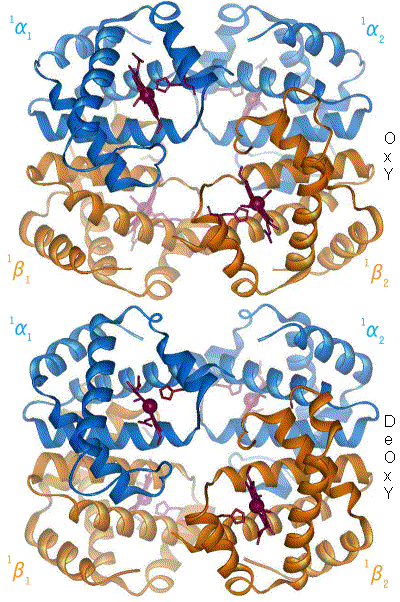
Sickle cell anemia is so named because of the odd elongated shape that red blood cells take when they become de-oxygenated. It  is a particularly nasty inherited disorder and leads to anemia as well as acute pain due to the bursting of blood capillaries that become blocked by these oddly shaped blood cells.

The cause of this is a mutation in the protein heamogloblin, the red molecule responsible for binding oxygen in blood cells. The single change in its sequence causes the hemoglobin proteins to clump together making the blood cell much more rigid. Whilst this is a debilitating disease it is recessive, meaning you need a copy of the faulty gene from both your mother and father, to express the symptoms.

So how does malaria tie into this? Well if in fact you only have one copy of the gene you do in fact show partial symptoms, not as severe but still somewhat uncomfortable. The upshot however is the added rigidity seems to convey some protection to malarial infection.
 
Up until now although there are plenty of theories dancing about no one was really sure exactly what the cause of this protection was. That is until a German group looked at the effects of this mutation on the actin cytoskeleton. Actin is one of the proteins that make up a network of fibrous molecules that contribute to the internal structure of cells.

When a red blood cell is invaded by the malaria parasite it’s actin cytoskeleton is reorganized to aid the delivery of a pathogen protein called adhesin to the cells surface. These proteins are, unsurprisingly given their name, responsible for sticking cells to surfaces. The over expression of this protein helps to prevent the destruction of the infected cells by preventing their entry into the spleen.

Through a powerful microscopy technique known as Electron microscopy these researchers discovered that the critical reorganization of actin in cells expressing the Sickle cell heamoglobin was blocked. This lead to a depletion of adhesion at the red blood cells surface and so they could enter the spleen to be cleared.

Whilst this does not have as obvious practical application as the first paper it is an excellent insight into the complex interplay of various cellular components, It’s quite amazing really that even 50 years after the protective phenotype of sickle cell anemia was discovered, only now are we gaining insight into how it works.

Makes me feel better about my lack of results anyway.

Ja, mata ne.

Saturday, 5 November 2011

Coming to an understanding

So can you tell who the odd one out is? That's right it’s me, I’m the only one without glasses right. Ok this wonderful picture of my lab group aside I do stick out like a sore thumb in this country. This has been hardest thing to adjust to for me being from such a cultural melting pot as Britain I really don’t like sticking out so much, being in the minority when I travel about, the staring took a little getting used to.

I don’t want to make it sound negative, it’s not malicious or anything but I do feel my neck burning often. It’s something many people talk about, the ‘gaijin’ bubble. You never truly accepted out here no matter what your current status, language skill level, or who your friends are and after talking to a few it’s something that just doesn’t change.

It’s a little bit sad in a way, it makes it very difficult to meet locals as most don’t want to know or are afraid of looking foolish, as they can’t speak English so well. Most of the people I do meet are exceptional for wanting to associate with foreigners. It doesn't make them bad people, far from it, but it does give a rather skewed impression of the Japanese people as a whole. I’m sure this would change once I grasp the language a little better but after 8 months of being here I still feel like I’m watching Japan from inside a glass box.

This post is mainly stemming from the fact I’ve had little time to travel of late and therefore plenty of time for reflection. Sadly work has taken the forefront again, lots to do. Josie is still out of action and as yet I don’t know how to fix her. Also after a hectic week we have now started another slot of beamtime, 9 days our longest yet. It’s scary and tiring but exciting. My new samples are looking good and I really think we can take some good images.
 
So back to being an outsider, it’s not that bleak I guess, though sometimes the gawping from the school kids (particularly teenage boys) gets to me. It’s not a nice feeling for anyone and I don’t like being looked at like I'm an alien. Still I’m making some sort of headway. Sam and myself were actually approached by some of the staff at our local climbing gym the other day whilst struggling with a problem. So our conversation was pretty rudimentary but it was something. Slowly getting there I guess, just need to work harder, grow some balls and speak more.

Also I really do feel as though I’m starting to bond with my colleagues. I’m not sure if Koreans are just a bit more open, if it’s because my  boss spent some time in the states, or if it’s my continued hard work that's impressed them, but I definitely feel more included. I’ve also recently started learning the Korean language (the alphabet is awesome its like lego) so that may factor into it a bit more also. I think showing appreciation and interest in anyone's home culture will always endear you to people.

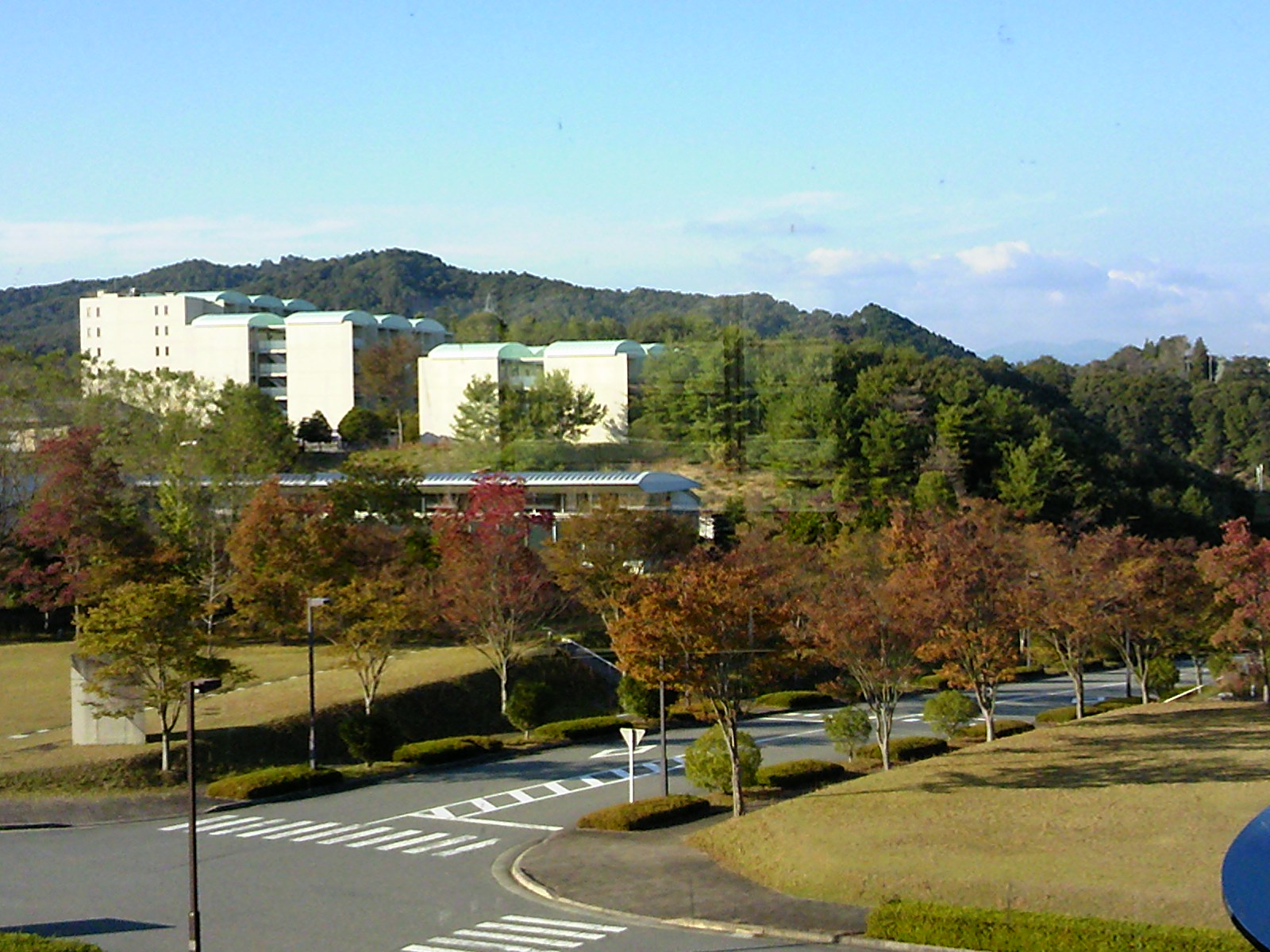
I’m not sure if these feelings will last, maybe I’m just on a low ebb right now. Over tired, over stressed and over worked. I’m not in bad shape or anything just fed up of being in the middle of nowhere. Perhaps things would be different if I lived near a city? I don’t really know and I guess I won’t anytime soon. At any rate for every bad experience I’ve had there are plenty of good ones to outweigh them. For the time being I’m still fairly happy with where I am. I mean look how pretty it is.

Right tant over I’ll talk a bit more bout what I’ve been up to recently. So as some of you may already know I’ve been trying to take my writing to new levels, particularily in the field close to my heart, trashy sci-fi. At the moment I’m working on a story for a writing contest put forward by a synchrotron in the UK called Diamond. As well as this I’ve submitted a story to nature, I’m pretty excited that the editor actually accepted it. Whilst that's by no means a publication at least it will get read.

I also tried my hand at a bit of scientific writing for the Medical Research Centre in London. They plan to put out a picture of scientific importance everyday of the year and they needed writers to pen the caption. Suffice to say I didn’t make the cut but I was thrilled at the opportunity to try and even got some helpful feedback.

Hopefully I’ll get to put some of this practice to good use soon as if this beamtime goes well I should have some data of my own to analyze and potentially publish. This time I’m hoping to look at one of my own samples, rather than one supplied by a collaborator.

My sample of choice is a preparation of microtubules, one of the three filamentous structures that contribute to the internal structure of our cells known as the cytoskeleton. Microtubules are large biological structures consisting of two proteins, alpha and beta tubulin, arranged head to tail in a cylindrical fashion. They are involved in all aspects of cellular activity, movement, replication, transport of materials and overall shape.

What is particularly interesting about them is a property known as dynamic instability. These complexes structures can rapidly assemble and disassemble within our cells in a very organized fashion. This is particularly important in events such as cellular migration, replication and differentiation which rely on the rapid movement of components within a cell at a much faster rate than can be achieved by diffusion alone..

The forces involved in these complex processes, from the linking of individual tubulins, organisation into single fibres and then the packing of fibres into bundles, are of great interest to many scientists, however there are a few problems. Firstly the process is call Dynamic INSTABILITY for a reason. The structures formed are very transient and so to image them you have to be either really fast or fix them in some way. Of course once fixed you lose a lot of important information about the process. Still the process of fixation itself isn't so well understood so there could be something interesting to investigate there also

The second is that whilst fairly long these things are also very thin. This makes it difficult to see any of the minor details of their arrangement particularly tricky. We are hoping that we can use the technologies we’ve been developing over the past few years to get a closer look at these stupendous strands. I’m not sure what the data will look like but I think we might be able to find something interesting out. Right back to work, all aboard the chirpy bus of wonder.

がんばるやん。

Ja mata Minna-san.

Thursday, 29 September 2011

I'm not Dead

I'm really not. I realise I've been quiet for a while and I do have a cool post lined up but I'm having some issues uploading the pretty pictures. Right now work is a bit crazy. I'm participating in a summer school for synchrotron users. It's been great, I've learned loads and met tons of new people as well, many in the same boat as myself. It's also served to refocus me, I'm really keen to get going with my work and I have loads of new ideas to develop once I'm finished.

Sadly however we also have a slot of beamtime during the Summer school. This has lead to essentially double shifts as I'm at the school all day then spending the evenings working on experiment prep. As you can imagine thats leaving little time for doing any blogging. Hopefully It'll settle down once the experiments are fully underway...maybe.

Mata ne